

Developmental Editing Services

A strong manuscript needs more than clean sentences. It needs a structure that holds, a story or argument that moves and a reader who never wonders why a chapter is there. Our developmental editors read your whole manuscript, then show you what is working, what is not and exactly how to fix it. You receive clear written feedback, a practical revision plan and a partner who stays honest about your book, so every later edit builds on solid ground. This is the stage where good books become great ones.

By clicking this checkbox, you agree to our Privacy Policy & Terms and Conditions.

Amazon Img 1
Amazon Img 2
Amazon Img 3
Amazon Img 4
Amazon Img 5
Amazon Img 6
Amazon Img 7
Amazon Img 8

What Our Developmental Editors Evaluate

The questions an editor asks depend on whether you are writing a story or teaching an idea. Here is what we look at in both.

Plot and Structure

Plot and Structure

Does the story build with rising tension and a satisfying resolution, or does the middle sag? For nonfiction, do the chapters follow a logical path with nothing missing or repeated?

Character and Voice

Character and Voice

Are motivations believable, and do characters change in ways the story supports? In nonfiction and memoir, is the voice consistent, credible and suited to the reader?

Pacing and Tension

Pacing and Tension

Where does the book drag, rush or lose momentum? We mark the places where a reader is likely to skim or stop.

Point of View and Setting

Point of View and Setting

Is the perspective consistent and the right choice for the story, and does the setting feel real and support the action?

Argument and Clarity

Argument and Clarity

Is the central idea stated clearly and supported by evidence, with each chapter moving the reader forward?

Audience and Takeaways

Audience and Takeaways

Is the book written for a specific reader, and does each chapter give that reader something to understand or do?

Examples and Stories

Examples and Stories

Do your stories and examples illustrate the point, or do they interrupt it? We flag the ones that work and the ones that do not.

Opening and Ending

Opening and Ending

Does the first chapter earn attention, and does the ending pay off the promise of the book?

Our Developmental Editing Process

We keep the steps clear so you always know what happens next.

Step 1

Quote and sample

Send us your word count, genre and a short description of your goals. We review a sample and give you a written quote, so you know the scope and cost before committing.

Process step connector
Step 2

Full manuscript read

Your editor reads the entire manuscript, taking notes on structure, pacing, voice and audience. A complete read matters because problems often connect across chapters.

Process step connector
Step 3

Editorial feedback

You receive the editorial letter, in-text comments and the chapter summary, with a clear list of priorities.

Process step connector
Step 4

Your revisions

You revise using the plan. Take the time you need. Many authors rewrite significant sections at this stage.

Process step connector
Step 5

Follow-up review

We discuss the revised draft with you, and where it is included in your package we review the changes and point out what remains.

Ready for an Editor Who Sees the Big Picture?

Get honest, practical feedback from professional developmental editors before you invest in line edits and design.

What Is Developmental Editing?

Developmental editing is a big-picture edit of a manuscript. The editor looks at structure, content, pacing, voice and audience, not at commas and spelling.

Think of your manuscript as a house. Copy editing and proofreading are paint and trim. Developmental editing checks the foundation and the floor plan. It is the stage where an editor tells you that chapter three belongs after chapter seven, that your main character needs a stronger reason to act, or that your argument skips a step your reader needs.

It is sometimes called structural editing, substantive editing or content editing, and the terms overlap. What they share is a focus on what the book says and how it is organized. Developmental editing usually happens after you have a complete draft and before line editing, copy editing and proofreading, because there is no point polishing sentences you may later cut or move.

At the end of the process you should know three things: what your book already does well, where it falls short for your intended reader, and what to do next. If you are not sure which stage you are in, our overview of book editing services explains the full sequence.

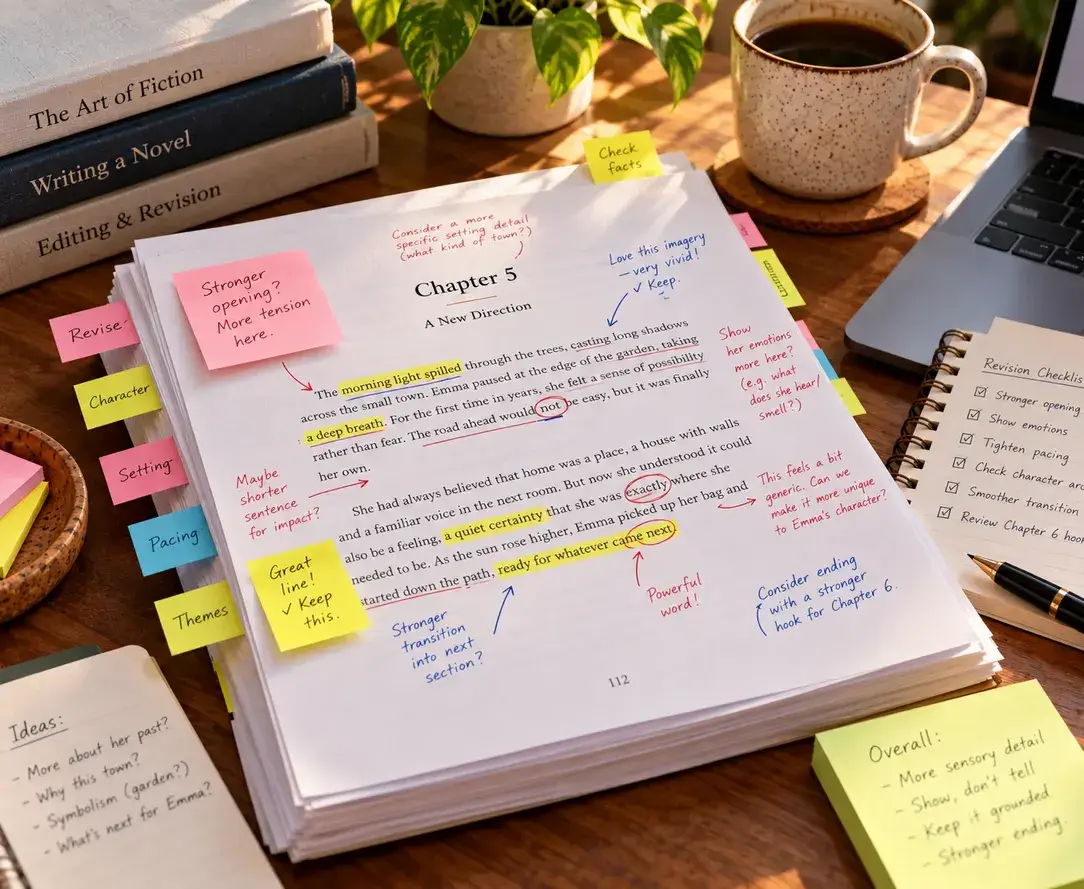
Manuscript pages with margin comments, sticky notes and revision tabs

What You Receive From a Developmental Edit

Good feedback is specific and usable. A thorough developmental edit typically includes the following.

  • An editorial letter. A written assessment of the manuscript's strengths, its biggest problems and the priorities for revision. It reads like a map, not a list of complaints.
  • In-text comments. Notes in the margins that point to specific places in the manuscript.
  • A chapter-by-chapter summary. A reverse outline that shows what each chapter does and where the structure can improve.
  • A revision plan. A suggested order of work, so you know what to fix first.
  • A follow-up conversation. A chance to ask questions and test ideas before you start rewriting.

Developmental editing is advice and direction. Your editor does not rewrite your book for you. You decide which suggestions to accept, and the book stays yours. If you want a writer to draft or rewrite sections for you, our ghostwriting services are the better fit.

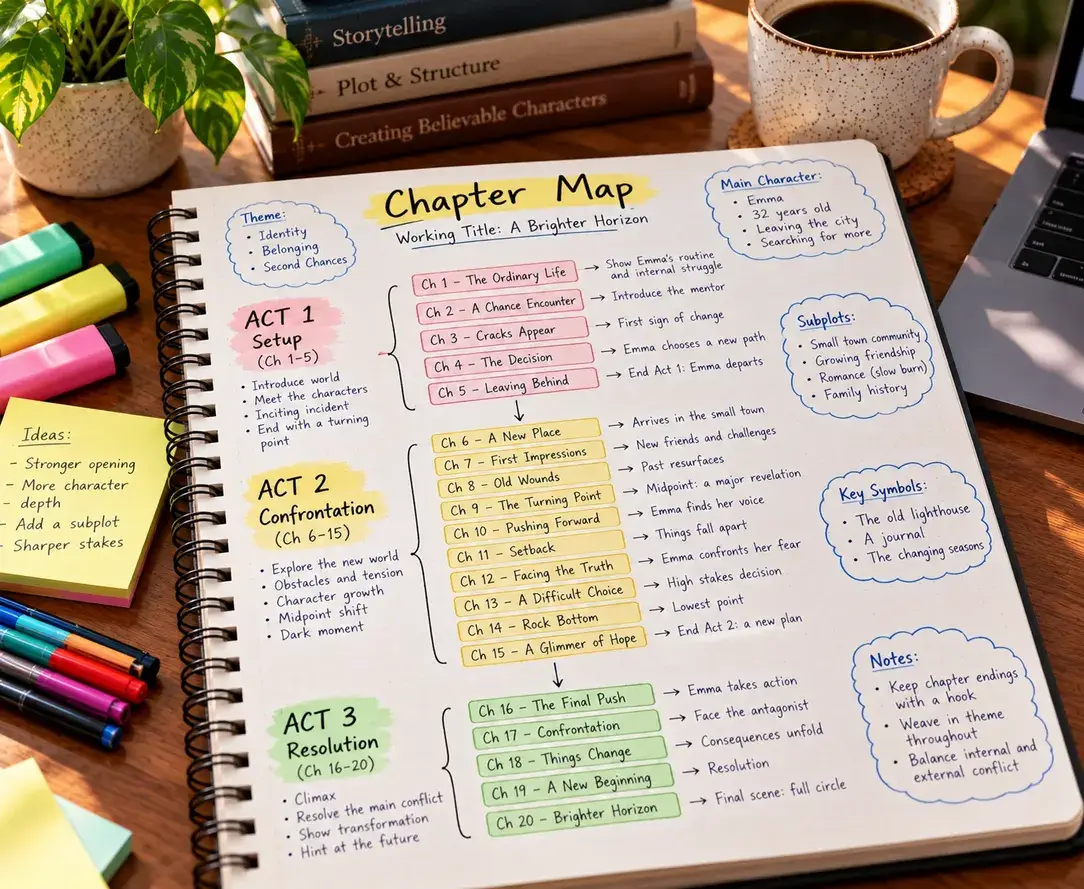
Hand-drawn chapter map breaking a novel into three acts

What an Editorial Letter Covers

The editorial letter is the heart of a developmental edit. A strong one is organized, specific and encouraging.

An overview of the whole book

The letter begins with what the book does well. This matters, because you need to know which parts to protect during revision.

The big issues, in order of priority

Next, the editor explains the two to five most important problems, such as a sagging middle, an unclear central argument or a protagonist whose goals are too vague. Each issue includes examples from the manuscript and suggestions for fixing it.

Chapter or scene notes

Where needed, the editor points to specific chapters or scenes that need attention, with short explanations.

Smaller patterns

The letter may mention repeated phrases, inconsistent details or habits in your style, but only briefly. Those belong in later editing stages.

Next steps

The letter ends with a plan: what to revise first, what can wait and how to know when the book is ready for line editing.

Chapter outline notebook with act-by-act planning cards and notes

Signs Your Manuscript Needs a Developmental Edit

If several of these sound familiar, a developmental edit will probably save you time and money later.

  • Beta readers say they got lost, bored or confused but cannot say why.
  • You have rewritten the opening several times and it still feels wrong.
  • The middle of the book feels slow or repetitive.
  • Your main message gets buried under extra ideas or tangents.
  • Characters act in ways that do not seem believable, or readers do not care what happens.
  • You cannot summarize the book in two or three sentences.
  • Chapters feel like separate essays, not parts of one book.
  • You have received agent or publisher feedback about structure or pacing.
  • You are close to the draft and cannot judge it objectively anymore.

An early developmental edit costs less than redoing the whole project after copy editing, cover design and layout.

Manuscript chapter with tabs, sticky notes and margin comments

Common Problems a Developmental Edit Solves

These issues come up often. Seeing them named can help you recognize them in your own work.

In fiction

  • A slow start. The opening chapters explain too much before anything happens.
  • A sagging middle. Scenes repeat the same tension without raising the stakes.
  • A passive protagonist. Things happen to the main character instead of because of their choices.
  • Unclear motivations. Readers cannot tell why characters act as they do.
  • A rushed ending. The final chapters resolve too much too quickly.

In nonfiction

  • A buried thesis. The main idea appears late or changes from chapter to chapter.
  • Chapters in the wrong order. Readers need an idea before the book gives it.
  • Too many ideas. The book tries to cover everything and covers nothing deeply.
  • Weak examples. Stories do not support the point they are meant to illustrate.
  • No clear reader. The tone shifts between beginners and experts.
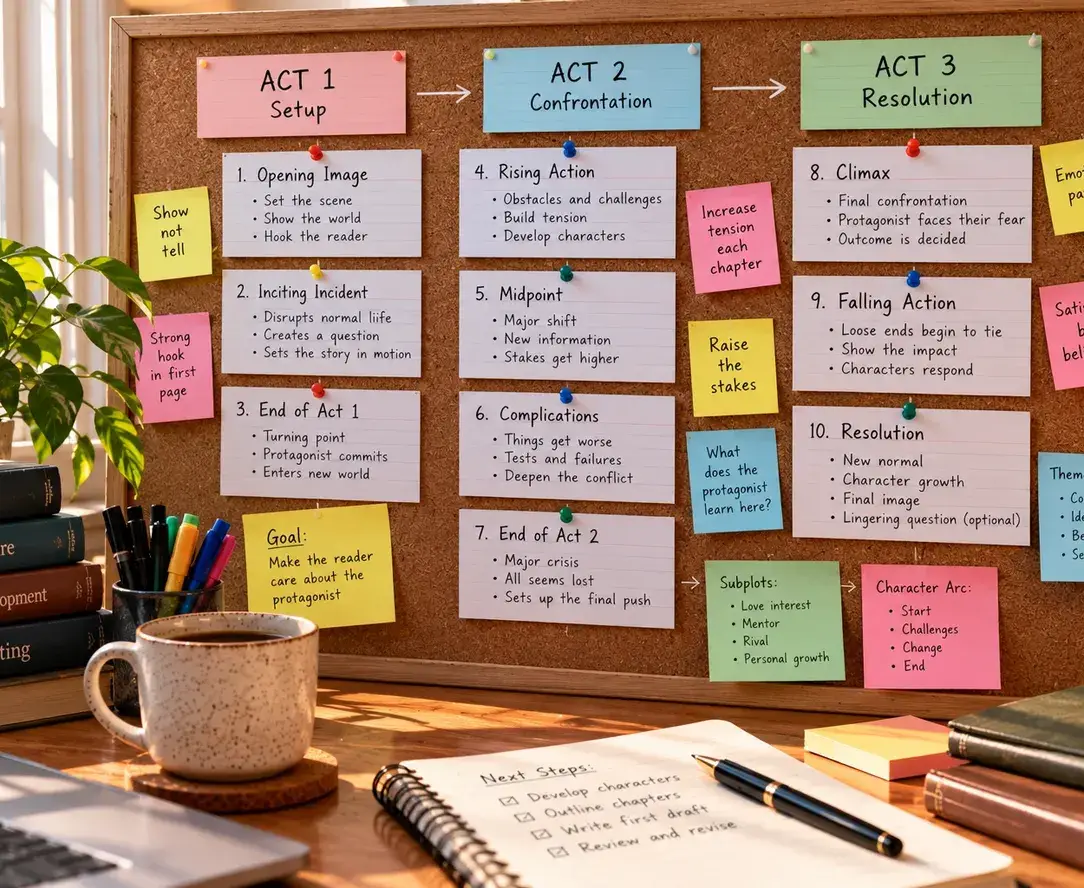
Corkboard with index cards mapping a three-act story structure

Developmental Editing vs Line Editing vs Copy Editing vs Proofreading

Each type of edit has a different job, and the order matters.

Type of editMain focusWhen it happensWhat changes
Developmental editingStructure, content, pacing, audienceFirst, after a complete draftChapters, scenes, arguments and organization
Line editingStyle, flow, word choice, toneAfter revisions from the developmental editSentences and paragraphs
Copy editingGrammar, usage, consistency, style guideAfter line editingErrors and inconsistencies
ProofreadingFinal typos and formatting errorsLast, after layoutSmall mistakes only

Most copy editors follow a style guide such as the Chicago Manual of Style. Developmental editors focus on the work before that stage. Skipping a stage can cause problems, so a book that needs structural work will not be fixed by proofreading alone.


Genres and Manuscripts We Edit

Our editors work across fiction and nonfiction, and we match your manuscript to someone who knows the genre.

Self-published authors often benefit most from this stage because no publisher editor has reviewed the book. Our editors for self-publishing authors page explains how we support that path.

Genres and Manuscripts We Edit

Developmental Editing for Self-Published and Traditionally Published Authors

The goals differ slightly depending on your route.

If you plan to self-publish

You act as your own publisher, so you carry the responsibility for quality. A developmental edit gives you the structural review a publisher's editorial team would provide, before you pay for design and printing. Our editing for self-publishing authors page explains the full path, and our self-publishing services can take you from edited manuscript to finished book.

If you plan to query agents or submit to publishers

A polished, well-structured manuscript has a better chance of holding an agent's attention. A developmental edit can strengthen the opening chapters and the overall arc before you submit. Remember that no editor can guarantee representation or a publishing contract.

Developmental Editing for Self-Published and Traditionally Published Authors

How Much Does Developmental Editing Cost?

Prices vary with word count, genre, how much work the manuscript needs and how fast you need it back.

Developmental editing is usually priced per word, per page or as a flat project fee. The more complex the manuscript, the more time the editor spends, and nonfiction with heavy research can cost more than fiction of the same length.

What affects the price

  • Word count. Longer books take longer to read and assess.
  • Depth of feedback. A brief evaluation costs less than detailed comments throughout the manuscript.
  • Genre and complexity. Technical or heavily plotted books can take more time.
  • Turnaround. Rush schedules usually add a fee.
  • Follow-up. A second review of your revisions is an additional service in many packages.

Market benchmarks

The Editorial Freelancers Association publishes a rate chart that many authors use as a reference point. It is a good way to sanity-check any quote, including ours.

Start with a free 30-minute consultation. We then send a written, fixed-price proposal, usually within 48 to 72 hours, so you know the scope and the price before you commit.

Be careful with extremely low quotes. A developmental edit requires a full, thoughtful read, and very low prices often mean a quick skim. Ask us for a written quote and compare scope, not just price.

How Much Does Developmental Editing Cost?

How Long Does a Developmental Edit Take?

Editing typically takes a few weeks to a few months, depending on the length and complexity of your manuscript and the depth of feedback.

A short book may take a couple of weeks. A long novel or a dense nonfiction manuscript can take longer, especially if the editor adds detailed margin comments. We confirm the schedule in your quote, and rush options are available when needed. We confirm the schedule in writing before you commit.

Remember to plan for your own revision time too. Most authors need weeks or months to make significant changes, and that time is part of a healthy process. Rushing the revision defeats the purpose of the edit.

How Long Does a Developmental Edit Take?

How to Prepare Your Manuscript for a Developmental Edit

A little preparation helps your editor give feedback that fits your goals.

  • Finish a full draft. Developmental editors need to see the whole shape of the book.
  • Do a basic self-edit first. Fix obvious errors, but do not spend weeks polishing sentences you may cut.
  • Write a short synopsis. A page describing the story or argument helps the editor compare intention with result.
  • Describe your reader. Tell us who the book is for and what you want them to feel or do.
  • List your concerns. If you suspect a weak middle or a confusing chapter, say so.
  • Use a clean file. A standard document format with numbered pages and consistent chapter headings is best.
  • Prepare to listen. Honest feedback can be hard to read. Wait a day before responding, then return to it with fresh eyes.
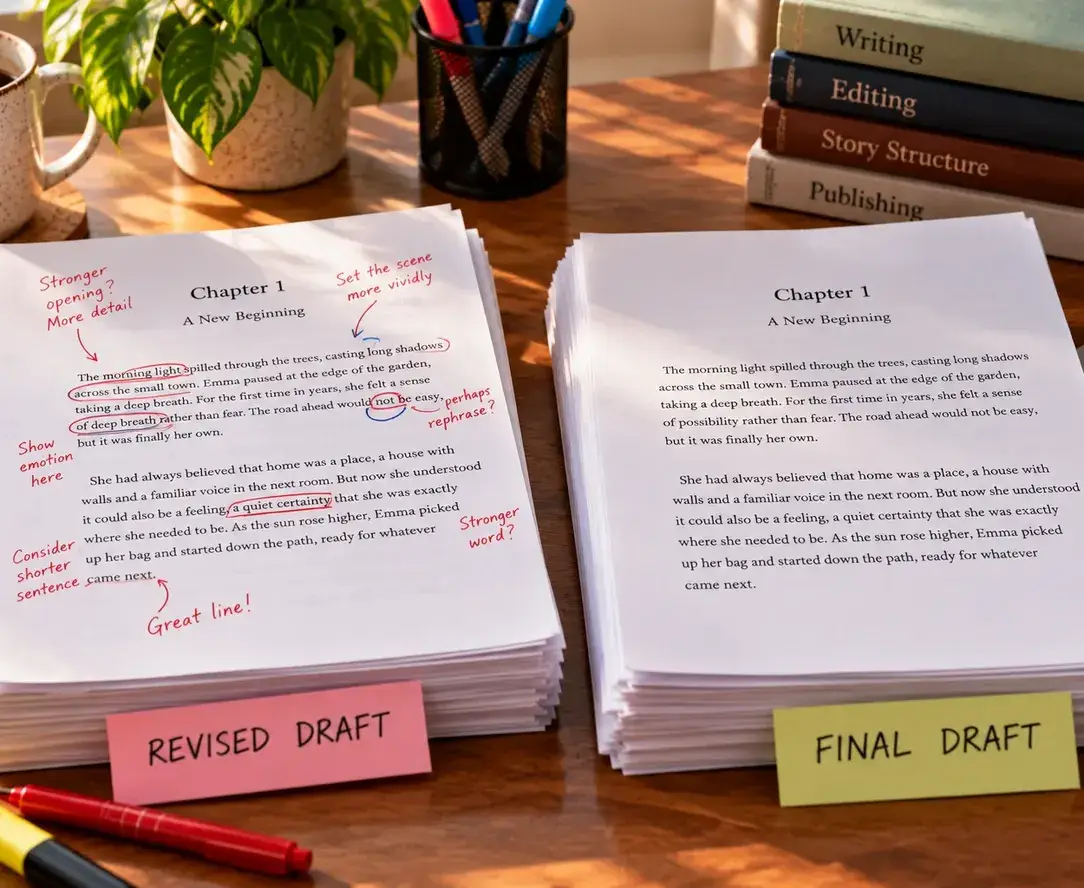
Side-by-side stacks of a marked-up revised draft and a clean final draft

Questions to Ask a Developmental Editor Before You Hire

A good fit matters as much as credentials. Use these questions to decide.

  • Have you edited books in my genre, and can you describe your approach?
  • What exactly will I receive, and in what format?
  • Do you read the whole manuscript, or only part of it?
  • How long will the edit take, and what happens if it runs late?
  • Can I ask follow-up questions after I receive the feedback?
  • Is a review of my revised draft available, and how is it priced?
  • How do you handle confidentiality?
  • Do you offer a sample edit or a trial section?

Be wary of anyone who promises to make your book a bestseller or to guarantee a publishing deal. Editing makes a book stronger. It cannot control what agents, publishers or readers decide. The Authors Guild offers helpful guidance for authors working with editors and other professionals.

Questions to Ask a Developmental Editor Before You Hire

Making the Most of Your Editorial Feedback

The edit only helps if you use it. These habits turn feedback into a stronger book.

Read it all before reacting

Read the letter once without making changes. Notes often make more sense in context.

Sort the notes

Separate big structural points from smaller ones. Tackle the big ones first, because they often solve smaller issues on their own.

Ask when something is unclear

If you do not understand a suggestion, ask. A short conversation can save weeks of guessing.

Trust your vision, with open eyes

You may disagree with some advice, and that is fine. But if several readers raise the same issue, take it seriously.

Move on to the next stage

After revisions, continue with line editing, copy editing and proofreading. When the text is ready, we can help with formatting and publishing.

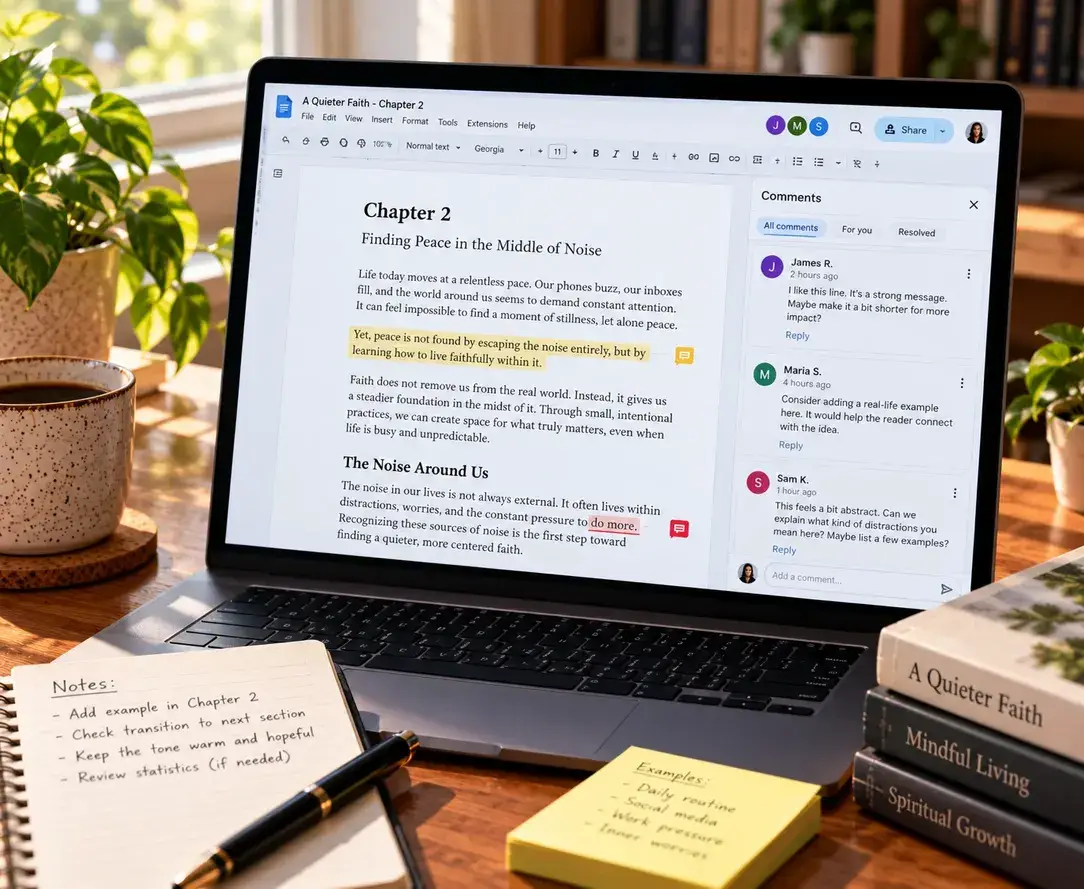
Manuscript chapter in a shared document with editor comments in the sidebar

Why Authors Choose Christian Faith Press

We treat developmental editing as a collaboration. Your goals set the direction, and your editor helps you reach them.

  • Editors matched to your genre. You get feedback from someone who knows what readers in your category expect.
  • Clear, usable feedback. We aim for specific advice you can act on, not vague criticism.
  • Respect for your voice. Editors guide structure and clarity while leaving your style intact.
  • Confidential handling. Your manuscript is shared only with your editing team.
  • A path forward. After revisions, we can continue with editing, design and publishing, or you can go elsewhere.

Our editors work across developmental editing, line editing, copy editing and proofreading, and they check each round of edits against your goals. Our editing is faith-centered for Christian manuscripts, so the integrity of your message is preserved.

Why Authors Choose Christian Faith Press

What Our Authors Say

Quotation mark

Seamless Process from Start to Finish

I honestly couldn’t have asked for a smoother publishing experience. Christian Faith Press took care of everything, from editing to distribution. They made sure my book looked fantastic and is available globally. Super stoked with how it turned out and highly recommend them!

Emily S. Thompson
Emily S. Thompson
Quotation mark

Professional and Supportive Publishing Experience

I was nervous about the whole publishing process, but Christian Faith Press made it super easy. They were there every step of the way, from editing to the final design. My book looks amazing, and it's now out there for everyone to read. Couldn’t be happier!

Michael T. Harris
Michael T. Harris
Quotation mark

Expert Guidance Every Step of the Way

I felt completely supported throughout the whole process. The team at Christian Faith Press gave me great advice and helped refine my book, making sure it was polished and market-ready. I’m proud of the final product and how it looks. They truly helped me level up!

Sarah L. Williams
Sarah L. Williams
Quotation mark

Quality Work with Excellent Customer Service

Christian Faith Press really knows what they’re doing. From editing my content to designing the cover and getting it out there for distribution, they handled everything. Their customer service was amazing, and I’m thrilled with how my book turned out. Worth every penny!

John M. Carter
John M. Carter
Quotation mark

Transforming My Manuscript into Reality

I had the manuscript, but Christian Faith Press really helped me transform it into something special. They worked with me closely on editing and design, and the final product turned out way better than I expected. My book is out in the world now, and I couldn’t be more excited!

David H. Lee
David H. Lee
Quotation mark

Exceptional Editing and Design Services

Christian Faith Press did an awesome job with my book! They cleaned up my manuscript, gave it a professional polish, and designed an eye-catching cover. The end result looks amazing, and I’m beyond happy with the final product! I couldn't have done it without them.

Rachel F. Scott
Rachel F. Scott
Quotation mark

Supportive Team That Delivered Results

I was a bit unsure about publishing my book, but Christian Faith Press made the whole thing smooth. They helped with editing, distribution, and even marketing. Now, my book’s out there, and I’m getting great feedback. I’ll definitely work with them again for any future projects!

Jessica G. Martinez
Jessica G. Martinez
Quotation mark

Professional Publishing Made Easy and Fun

I was pretty stressed about the publishing process, but Christian Faith Press made it fun and easy. They took care of all the nitty-gritty stuff, and I got to focus on the writing. Now, my book’s available everywhere, and I’m so stoked about it!

Kevin P. Johnson
Kevin P. Johnson
Quotation mark

A True Partner in Publishing Success

Christian Faith Press wasn’t just a service provider—they were a true partner in my success. They helped me craft my book exactly how I wanted, offering expert advice and support. Now my book is out there, and it feels amazing!

Lisa Thompson
Lisa Thompson

Developmental Editing FAQs

Straight answers to the questions authors ask before they hire a developmental editor.

What is developmental editing?
Developmental editing is a big-picture edit that evaluates your manuscript's structure, content, pacing, voice and audience. The editor gives written feedback and a revision plan instead of correcting grammar.
When should I get a developmental edit?
Get one after you have completed a full draft and before line editing, copy editing and proofreading. Editing the big issues first prevents you from polishing text you may later cut.
What is the difference between developmental editing and copy editing?
Developmental editing addresses structure, story and argument. Copy editing corrects grammar, usage and consistency. They happen at different stages, and one does not replace the other.
How much does developmental editing cost?
Cost depends on word count, genre, depth of feedback and turnaround. After a free 30-minute consultation we send a written, fixed-price proposal, usually within 48 to 72 hours, so you know what is included before you commit.
How long does a developmental edit take?
Editing typically takes a few weeks to a few months, depending on length, complexity and the depth of feedback. We confirm the schedule in your quote.
Do I need a developmental edit for nonfiction?
Often yes. Nonfiction depends on clear structure and a focused argument, and an editor can spot gaps, repetition and unclear explanations that are hard to see in your own writing.
Will the editor rewrite my book?
No. A developmental editor gives guidance, and you make the changes. If you want someone to write or rewrite sections, ghostwriting or a collaborative writing service may be a better fit.
Is developmental editing worth it for self-published authors?
For most authors, yes. Without a publisher's editorial team, a developmental edit is the best way to catch structural problems before you spend money on design and printing.
What do I get at the end of a developmental edit?
You receive an editorial letter, in-text comments, a chapter-by-chapter summary and a revision plan. A follow-up conversation is also part of many packages.
Is my manuscript kept confidential?
Yes. Your manuscript is shared only with your editor and the project team, and we can sign a confidentiality agreement if you ask.

Let’s Begin!

Prefer to talk now? Start a live chat

By clicking this checkbox, you agree to our Privacy Policy & Terms and Conditions.